Have your chimney inspected once a year and swept whenever the inspection finds soot or creosote buildup. That is the rule in NFPA 211, the national fire code for chimneys, fireplaces and vents, and it applies to wood-burning fireplaces, gas fireplaces and the chimneys that vent boilers and water heaters.
What the fire code says
NFPA 211 is the national standard for chimneys, fireplaces, vents and solid fuel-burning appliances, published by the National Fire Protection Association. It calls for chimneys, fireplaces and vents to be inspected at least once a year, and for cleaning, maintenance and repairs to be done when the inspection shows they are needed. The yearly inspection is the fixed part. How often the flue needs sweeping depends on how much you use it and what you burn.
Wood-burning fireplaces
Burning wood leaves soot and creosote on the inside of the flue. The Chimney Safety Institute of America recommends a sweep once the sooty buildup reaches about one eighth of an inch, and sooner if the creosote has turned to a hard glaze. Creosote burns, so a thick layer is what turns a normal fire into a chimney fire.
How fast a flue reaches that point depends on how often you burn and how dry the wood is. The yearly inspection is when we measure it. If you burn often through the winter, the inspection may show the flue needs a second sweep before spring.
Gas fireplaces, boilers and water heaters
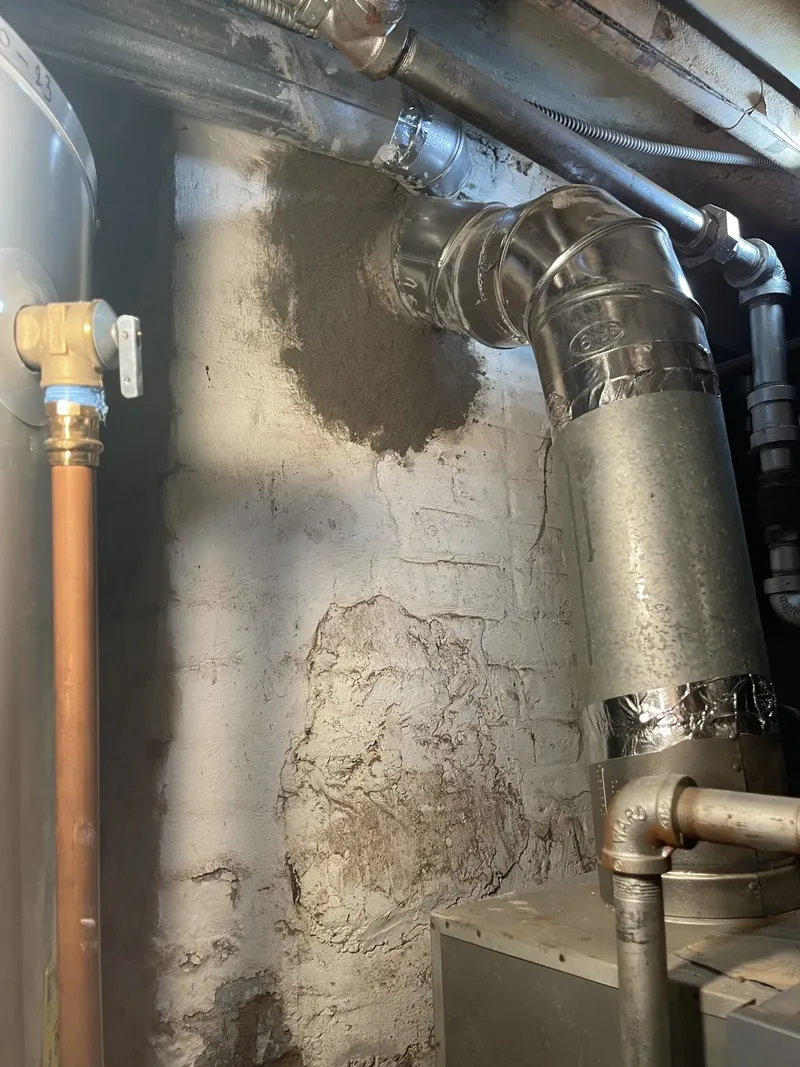
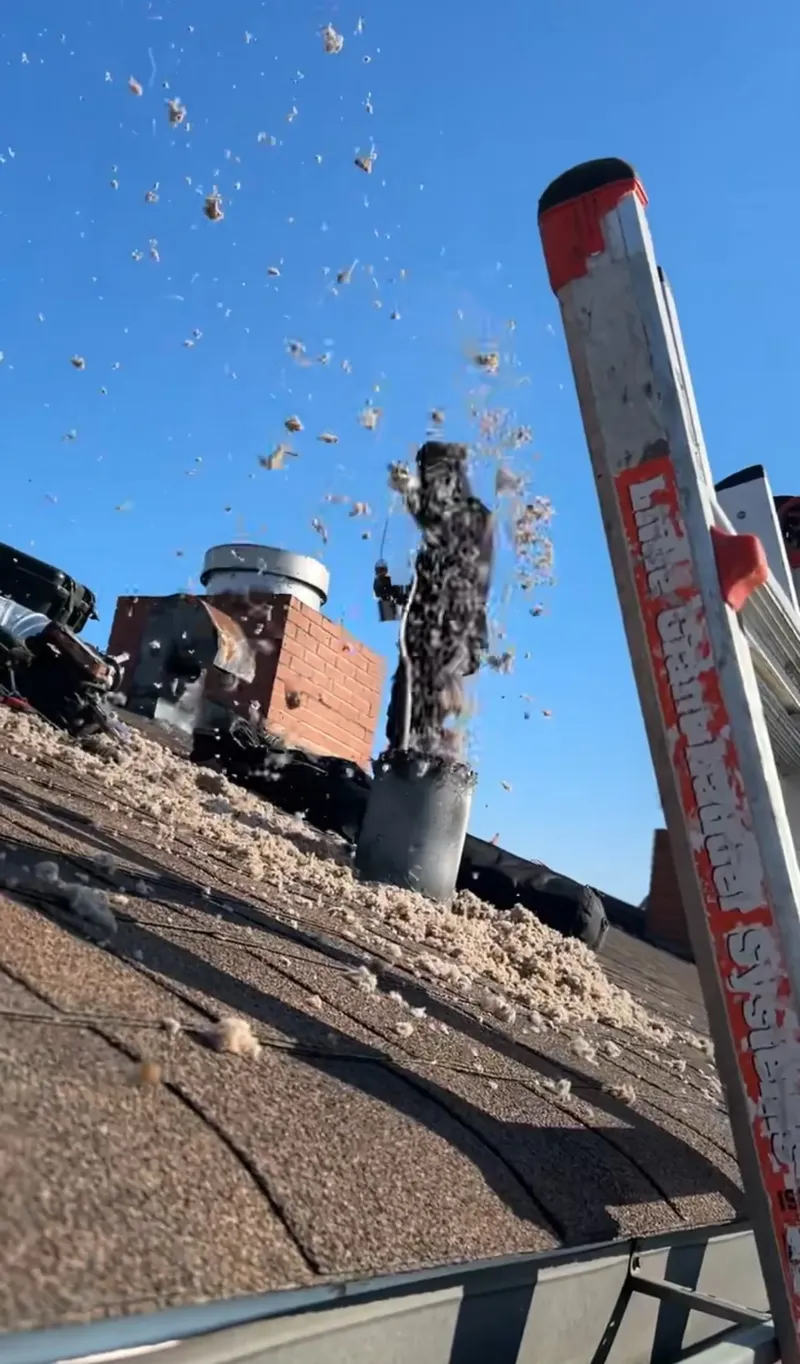
Gas burns cleaner than wood, but the flue still needs the yearly inspection. Birds and squirrels nest in open flues, debris falls in from the roof, and old clay tile liners crack. A blocked or damaged flue on a gas appliance can send exhaust back into the house instead of up and out.
In New York City, the heating season for residential buildings runs from October 1 to May 31, so a building's boiler runs for most of the year. The chimney it vents into should be inspected before October. See boiler and water heater venting.
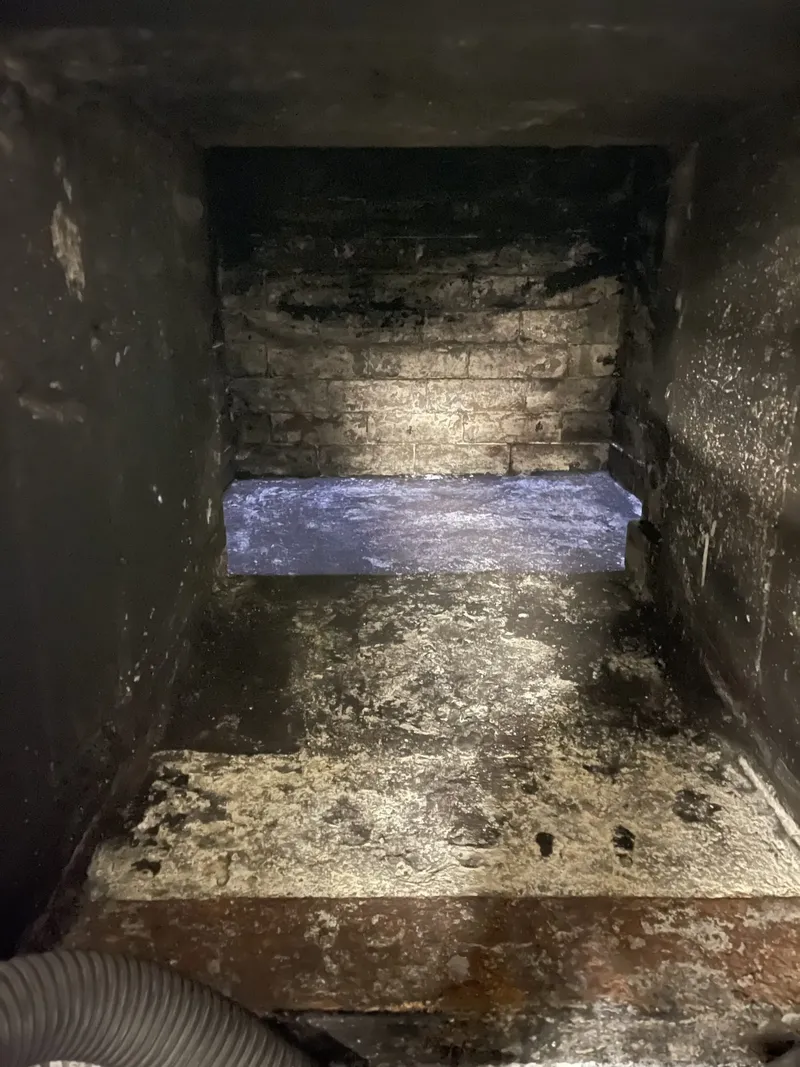
Signs the chimney needs attention sooner
Do not wait for the yearly visit if you notice any of these:
- Smoke comes into the room when the fireplace is lit
- A strong smell from the fireplace, often worse in humid weather
- Pieces of tile, brick or debris falling into the firebox
- Animal sounds in the chimney, or nesting material in the firebox
- Water in the firebox or stains on the wall around the chimney
- A damper that will not open or close
Most of these point to a blocked flue, a missing chimney cap or a damaged liner. An inspection shows which one. More on these problems on our chimney repair page.
A fireplace you have not used in years
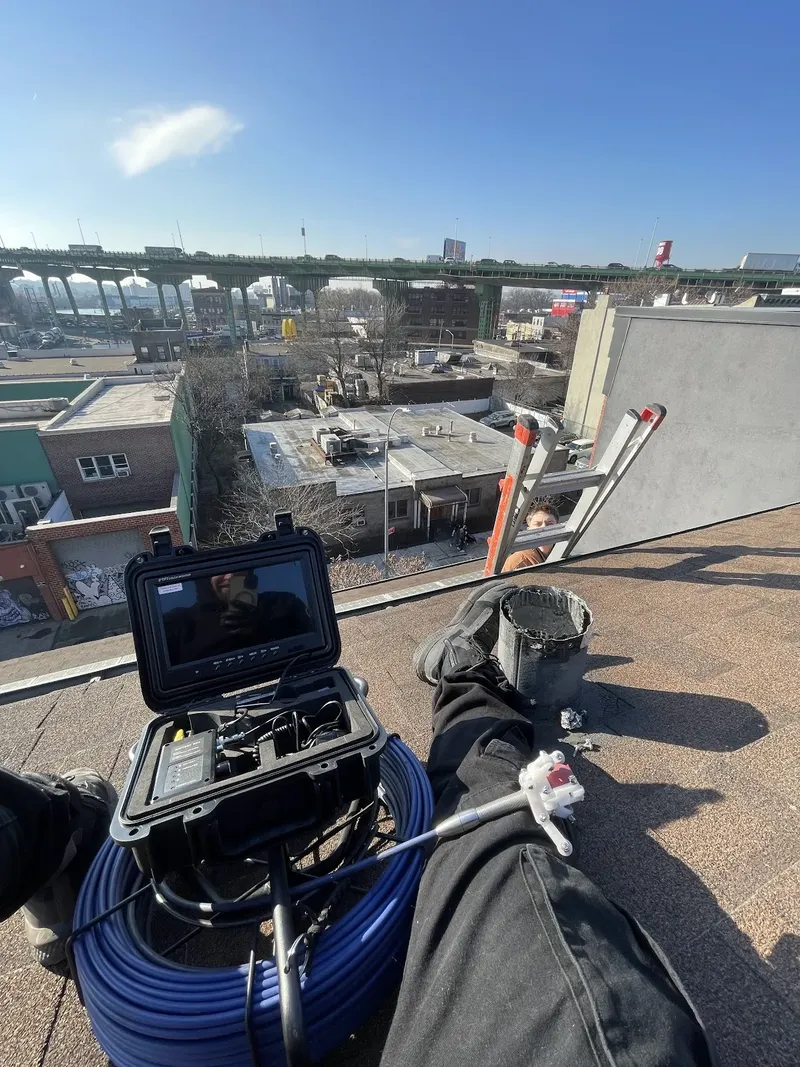
If you bought a house with a fireplace, or you have not lit yours in a long time, book an inspection before the first fire. A flue that has sat unused for years is the one most likely to be blocked by a nest or to have cracked tiles you cannot see from the room. We check it with a camera from the bottom to the top. If the flue needs a new liner, you get a flat-rate quote first. See when a chimney needs a stainless steel liner.
The best time to book in New York
Late summer and early fall. The first cold week of the year is when everyone calls at once, and booking before it leaves time for a repair or a new cap if the inspection finds one is needed.
What we check at the yearly visit
At every chimney inspection we check the firebox, the damper, the smoke chamber and the flue, and we look at the top of the chimney. Then we tell you what condition it is in and what, if anything, it needs. You can request a visit with the quote form, or call or text (646) 290-6327.