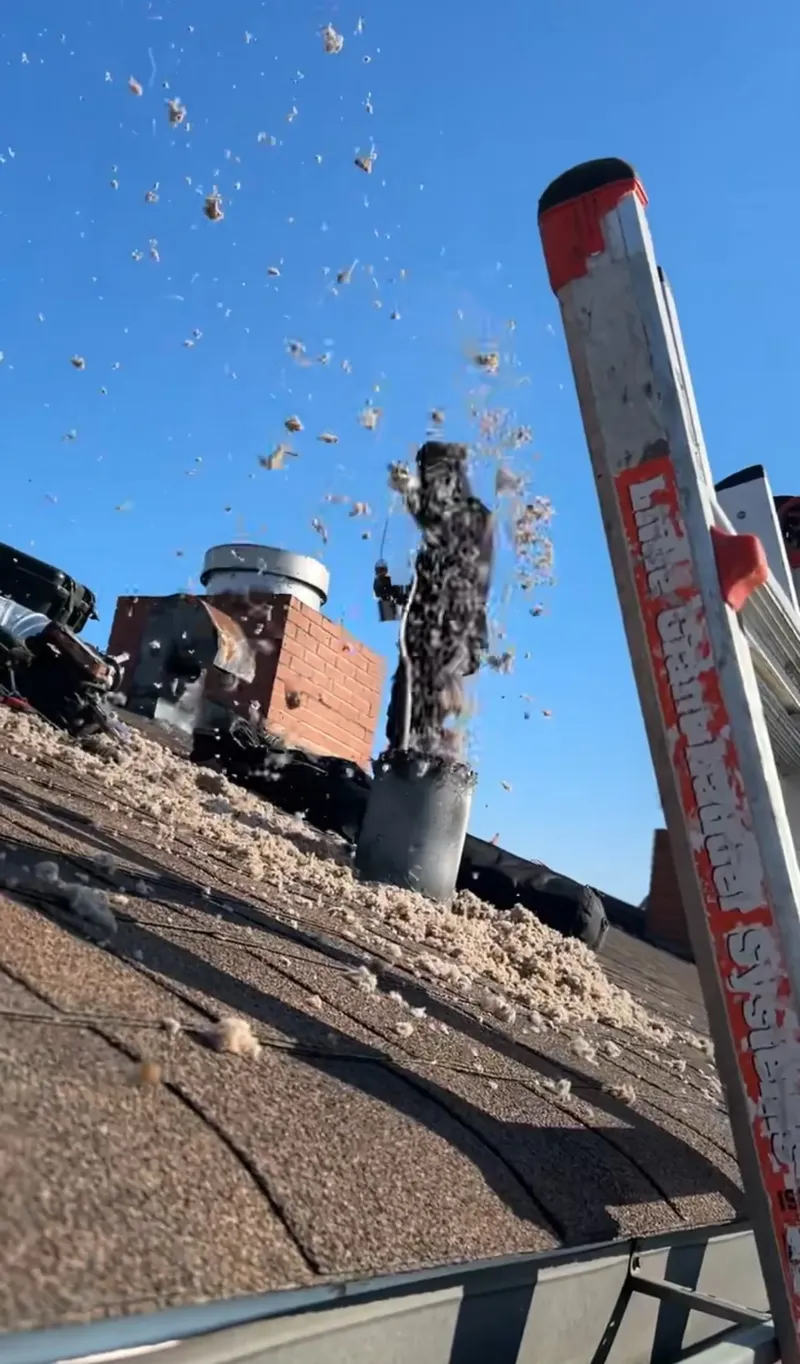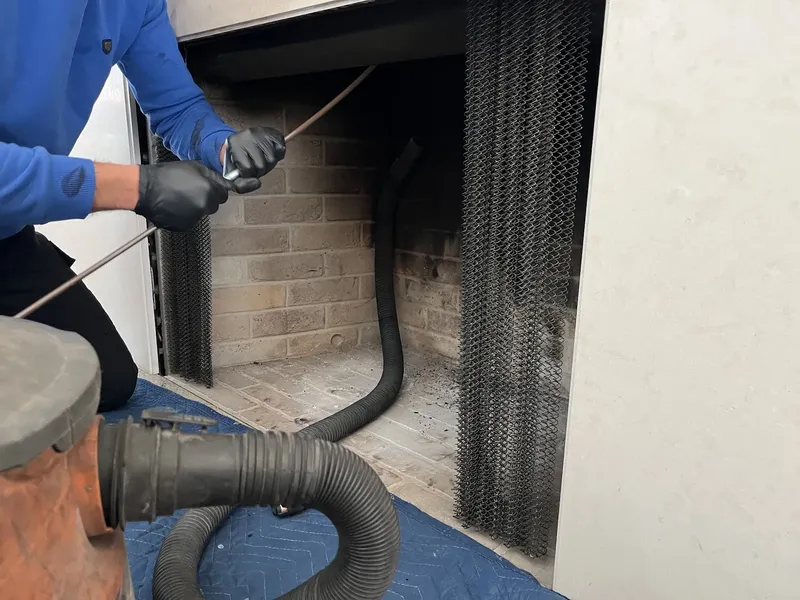
When a building switches from an oil burner to a gas boiler or water heater, the chimney has to be cleaned and inspected before the new appliance is connected, and in many cases it needs a new stainless steel liner sized to the gas appliance. The New York City Fuel Gas Code requires the cleaning, and the size and condition of the old flue decide whether it can be used as it is.
What the NYC Fuel Gas Code requires
Section 503.5.6 of the New York City Fuel Gas Code says that before an existing appliance is replaced or a new one is connected to a chimney, the chimney has to be examined to make sure it is clear, and it has to be cleaned if it was used to vent an oil-burning or wood-burning appliance. Oil leaves soot and scale in the flue, and that buildup can block the draft of a gas appliance or fall to the base of the chimney.
The same section says chimneys must be lined in accordance with NFPA 211. An existing chimney can stay in use without changes only when it is in good condition, correctly sized, and the new appliance is of a similar type, input and efficiency to the old one. An oil burner replaced by a gas boiler usually does not meet that test. Where the inspection finds the chimney is not safe for the new appliance, the code calls for it to be repaired, lined, relined or replaced.
Why the old oil flue often does not fit a gas boiler
Flue gases from gas are cooler and carry more water vapor than oil exhaust. In a large, cold masonry flue built for an oil burner, those gases cool down before they reach the top. The draft weakens, and the water vapor condenses on the inside of the chimney. Over time the condensation wears away mortar joints and clay tiles, and a weak draft can let exhaust spill back into the basement.
A stainless steel liner sized to the new appliance fixes both problems. It gives the gases a smaller, smooth path that warms up fast, and it keeps the condensation off the brick. We size the liner to the boiler and the water heater it will serve and install it from the roof. See when a chimney needs a stainless steel liner.
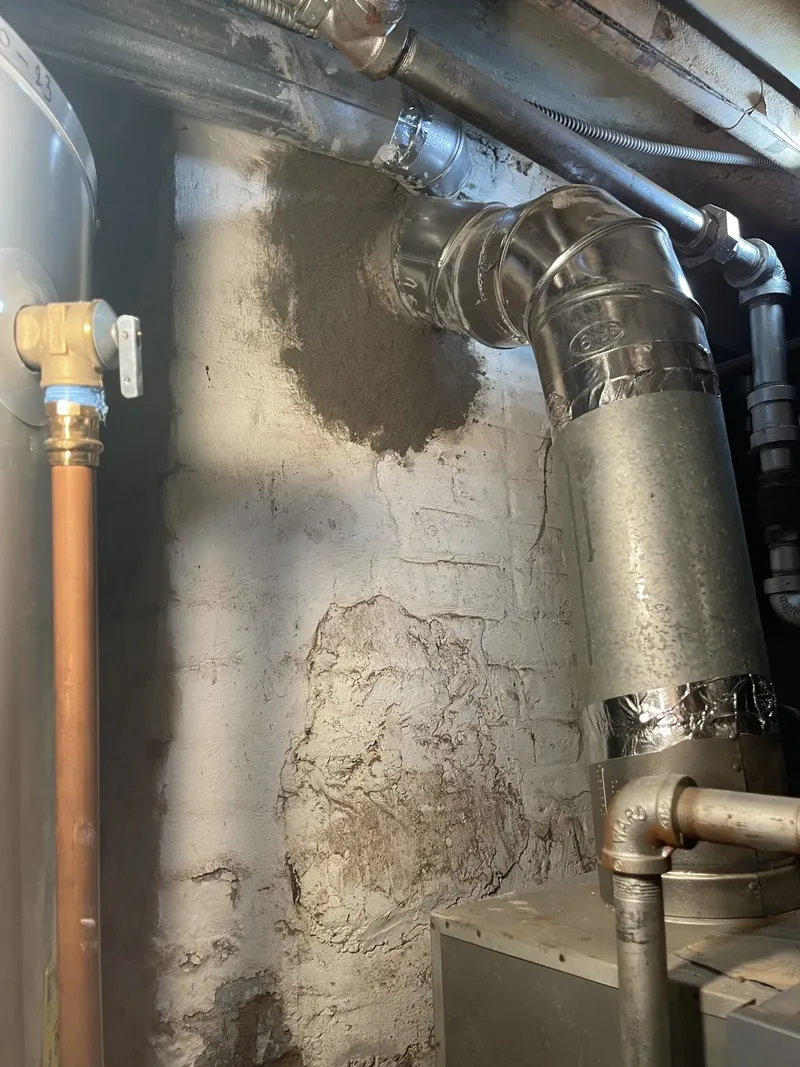
When the water heater is left alone on the chimney
Some new high-efficiency boilers vent out through the wall with their own plastic pipe and do not use the chimney at all. If the gas water heater stays on the old chimney, it is now the only appliance on a flue that was built for a much larger burner. A small appliance on a big, cold flue has the same draft and condensation problems described above, often worse. This case needs a check and usually a smaller liner, even though the water heater itself did not change.
How the chimney part of a conversion works
The gas piping, the gas meter and the boiler itself are a plumber's job, and in New York City gas work is done by a licensed master plumber. The chimney work runs alongside it:
- We clean the oil soot out of the flue and the base of the chimney.
- We inspect the flue with a camera and measure it.
- You get a flat-rate quote for any liner or repair it needs.
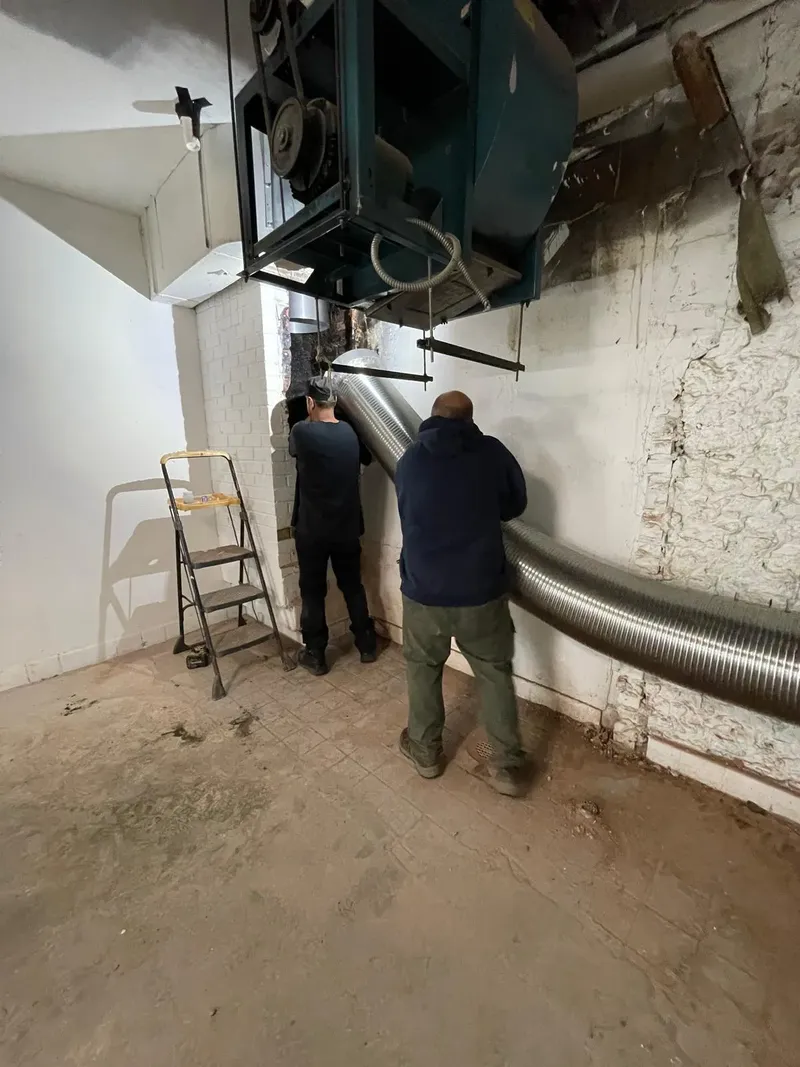
- We install a stainless steel liner sized to the gas boiler and water heater, connect it at the base and finish the top with a chimney cap.
On boiler jobs in row houses and apartment buildings, the connection at the bottom of the chimney is often the hard part: the old oil breeching has to come out, and sometimes the masonry at the base has to be opened to reach the flue. We plan that before the new boiler arrives, so the plumber is not waiting on the chimney.
When to call us
Call before the new boiler is installed, not after. If the chimney needs a liner, it is easier to install while the old burner is out and the basement is open. We work on boiler chimneys across Brooklyn and Manhattan, from row houses in Park Slope, Bed-Stuy and Crown Heights to apartment buildings in Harlem and on the Upper West Side, for homeowners, property managers and building supers.
See boiler and water heater venting and boiler chimney repair for the services, or use the quote form or call or text (646) 290-6327. Tell us the boiler model if you already have it.