A chimney needs a stainless steel liner when its flue is cracked, open at the joints, unlined or the wrong size for the fireplace or appliance it vents. In New York City this usually comes up in three situations: an inspection finds broken clay tiles, an old fireplace is about to go back into use, or a boiler or water heater is being replaced.
What a liner does
The liner is the inside wall of the flue. It carries smoke and exhaust gases from the fireplace or the appliance to the top of the chimney, keeps heat away from the wood framing around the chimney, and protects the brick and mortar from the acids in the exhaust. It also sets the size of the flue, and the size controls how well the chimney draws.
Most older Brooklyn and Manhattan chimneys were built with clay tile liners, and the oldest ones with none at all. Clay tiles crack with heat and age, and the mortar joints between them open up. A stainless steel liner goes inside the old flue and replaces it as the path for the smoke and gases.
Signs the flue needs a new liner
You usually cannot see liner damage from the room. It shows up in a camera inspection of the flue. These are the findings that lead to a new liner:
- Cracked, broken or missing clay tiles
- Open joints between the tiles
- No liner at all, only brick
- Damage after a chimney fire
- A flue that is too big or too small for a new boiler or water heater
Pieces of tile in the firebox, smoke coming into the room and stains on the wall around the chimney can all point to a damaged flue.
Liners for fireplaces
For a wood-burning fireplace, the liner is sized to the fireplace opening, so the flue can carry the smoke up and out. This often comes up in row houses, when a parlor-floor fireplace that has not been used for years goes back into use. We inspect the flue first and measure the fireplace before we quote.
Liners for boilers and water heaters
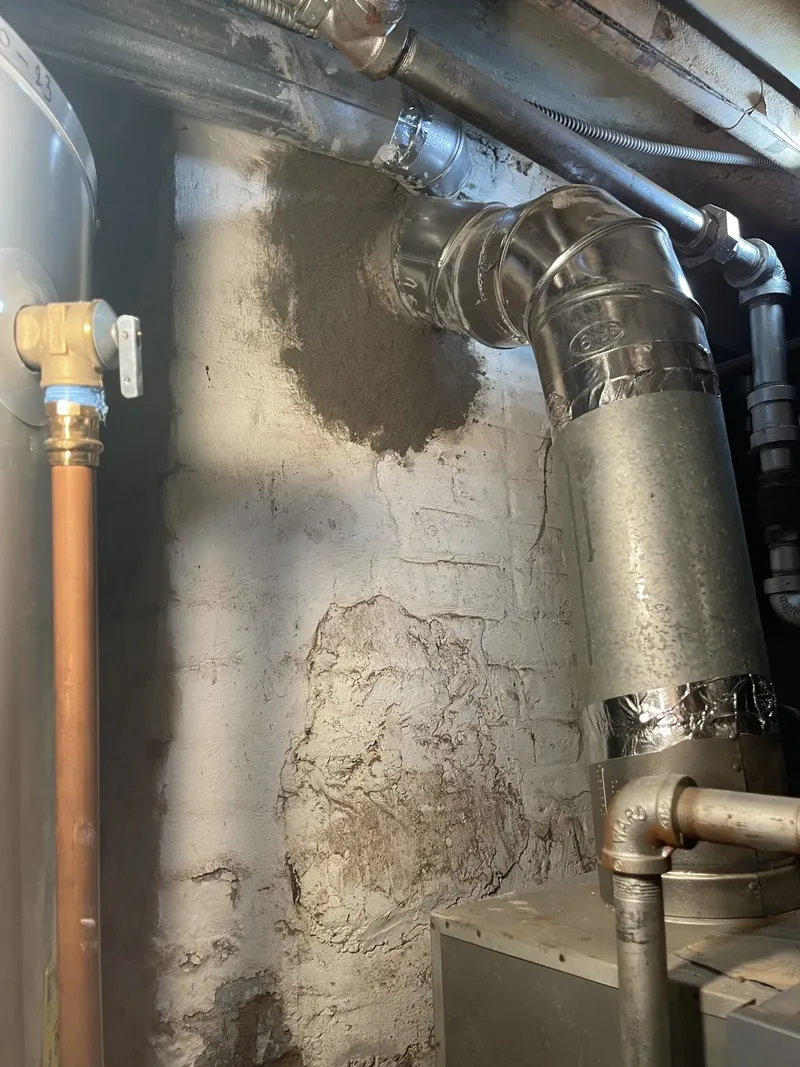
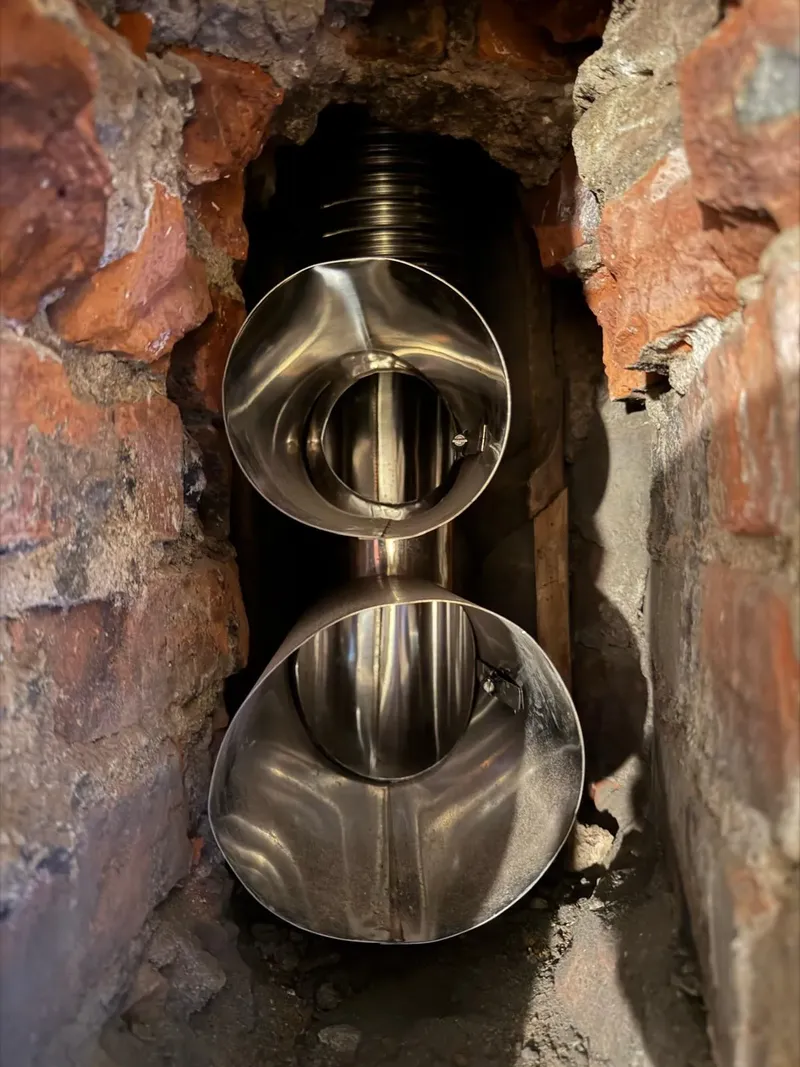
A gas boiler or water heater needs a flue sized to the appliance. An old masonry flue that was built for a different boiler, or for an oil burner, is often too big for a modern gas appliance. We install stainless steel liners sized to the boiler or water heater and connect them at the base of the chimney. See boiler and water heater venting.
How we install a stainless steel liner
- We inspect the flue with a camera and measure it.
- You get a flat-rate quote for the job.
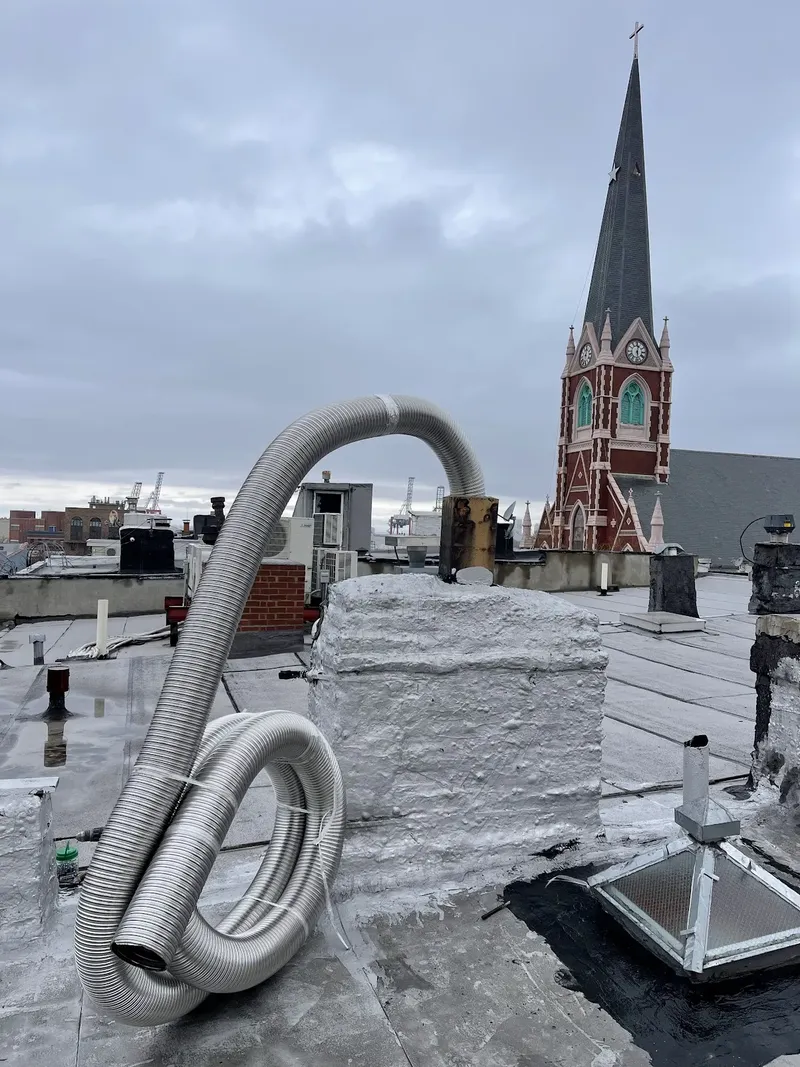
- We lower the liner through the flue from the roof.
- We connect it at the bottom to the fireplace or the appliance.
- We seal the top and finish it with a chimney cap, so rain, birds and debris stay out.
Because the liner goes in from the roof, the work inside your home is usually limited to the fireplace or the appliance connection. You can see liner jobs from start to finish in our gallery.
How a liner job is quoted
Liners are quoted per job, at a flat rate, after the inspection. The quote depends on the height of the chimney, the access to the roof and to the fireplace or appliance, the materials and the scope of the work. Installation jobs need a 50% deposit, and the balance is due when the work is done. Taxes and any permit costs are added to the quote.
How to start
Book a chimney inspection, or a sweep and inspection if the fireplace has been in use. Use the quote form, or call or text (646) 290-6327, and tell us what the chimney vents and the type of building. More about our chimney liner work.