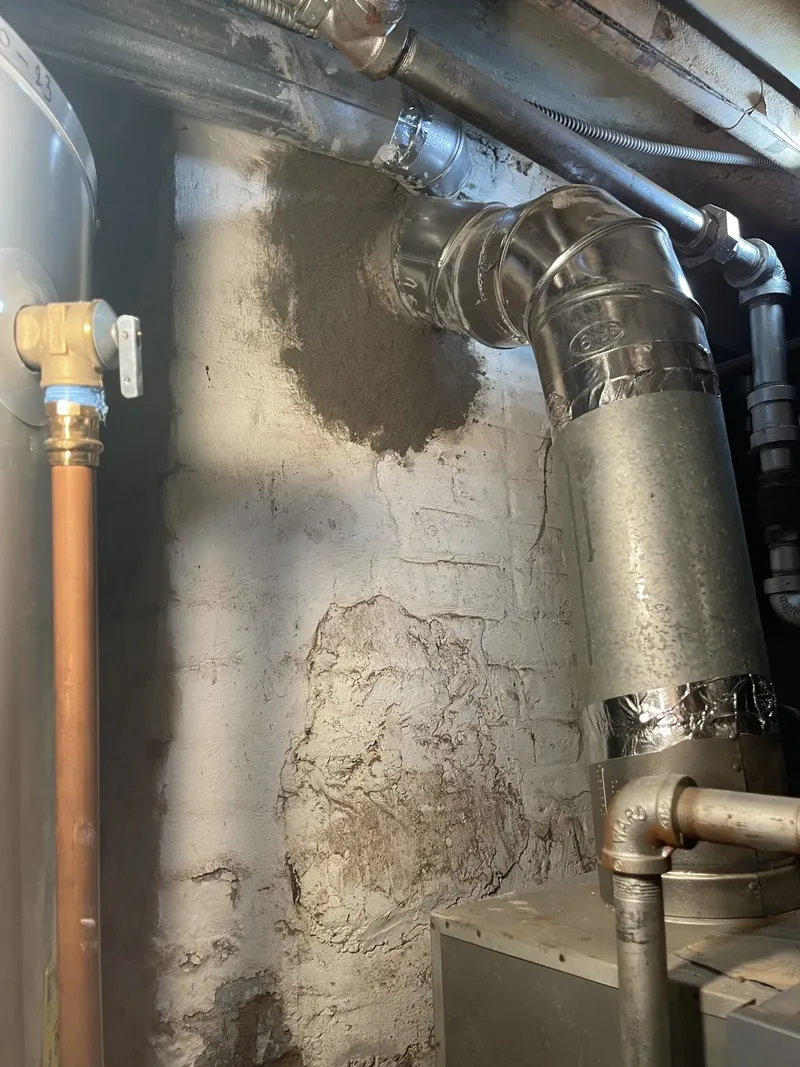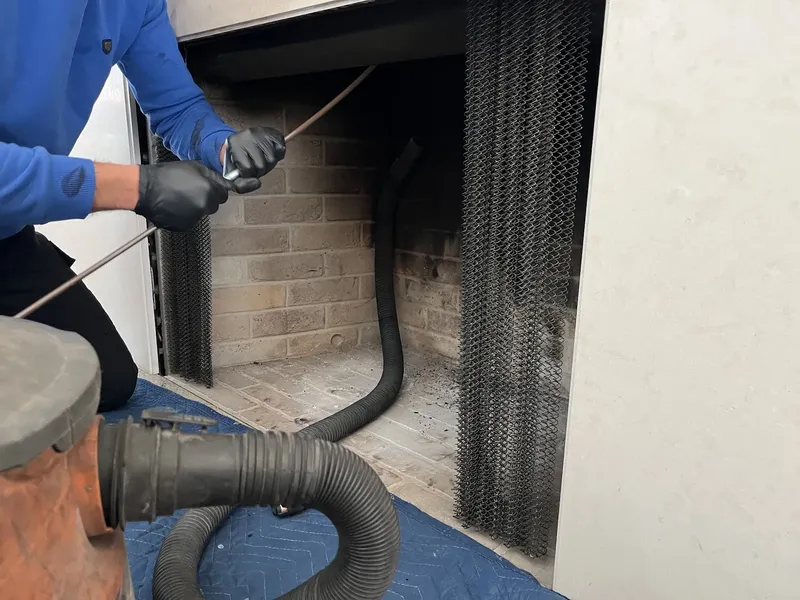
A chimney fire usually shows itself as loud cracking and popping, a lot of dense smoke and an intense, hot smell, sometimes with a low rumble like a passing train. If that happens, get everyone out and call 911. Afterward, do not use the fireplace again until the chimney has been swept and inspected with a camera, because the fire can crack the flue in places you cannot see.
What causes a chimney fire
Burning wood leaves creosote on the inside of the flue. The Chimney Safety Institute of America (CSIA) describes it as black or brown, crusty and flaky, sticky and tar-like, or shiny and hard. All three forms burn. When enough of it builds up and the flue gets hot enough, the creosote catches fire.
Creosote builds up faster with wet or unseasoned wood, a damper that is only partly open, closed glass doors and a cold flue. In late fall the risk goes up, because fireplaces that sat unused all summer get lit again, often without a sweep first.
Most chimney fires go unnoticed
CSIA notes that most chimney fires are not the loud, dramatic kind. A slow-burning chimney fire may give no sign in the room, yet it reaches temperatures high enough to damage the chimney and the wood framing around it. These are the signs a sweep looks for afterward, from CSIA's list:
- Puffy or honeycombed creosote in the flue
- A warped damper or warped metal connector pipe
- Cracked or collapsed flue tiles, or tiles with pieces missing
- A discolored or bent chimney cap
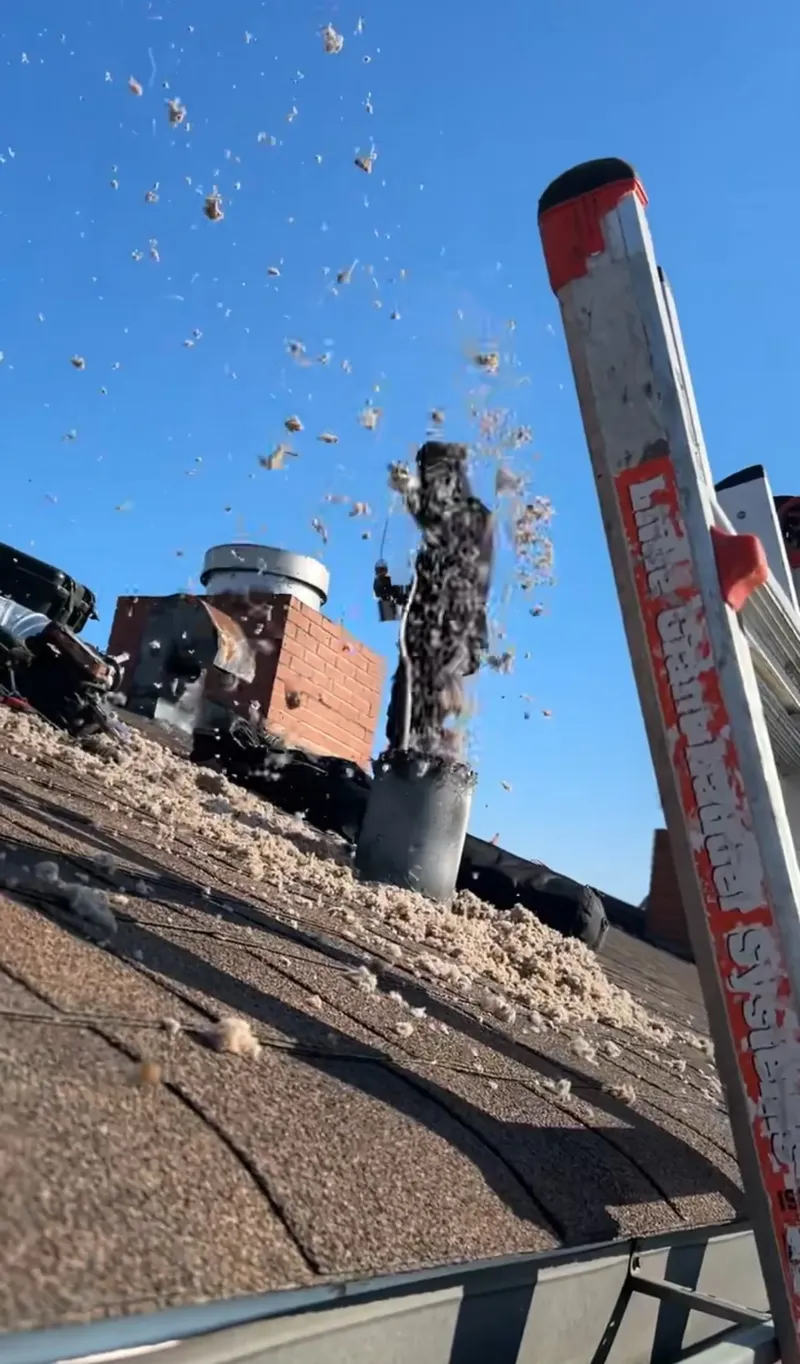
- Flakes of creosote on the roof or the ground
- Roofing damaged by hot creosote
- Cracks in the outside of the chimney
- Smoke escaping through the mortar joints
If you find any of these, treat it as if the chimney had a fire.
What to do after a chimney fire
- Do not light the fireplace again. CSIA advises against using the chimney until a chimney professional has swept and evaluated it.
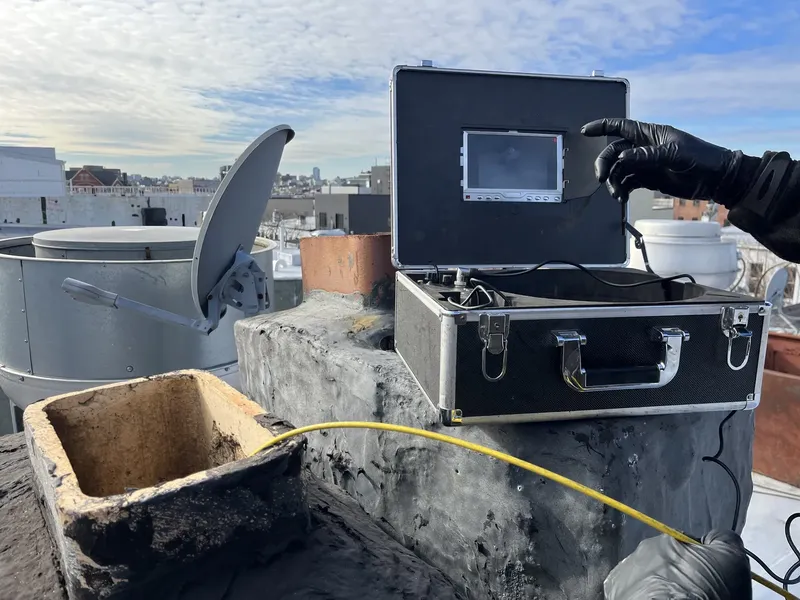
- Book a sweep and a camera inspection. The fire department puts the fire out; it does not clean or inspect the chimney.
- Ask for photos. CSIA recommends documenting the damage and the creosote with photos before the chimney is swept, for your homeowners' insurance claim. CSIA says most chimney fire damage is a covered loss, but check your own policy.
NFPA 211, the national standard for chimneys and fireplaces, calls for a more detailed inspection after a chimney fire than a routine yearly check. That inspection includes a camera run through the full flue.
What the inspection looks for
CSIA puts the heat of a chimney fire at around 2000°F, enough to crack clay tiles, push out mortar and collapse a liner. We run a camera from the bottom of the flue to the top and check every tile and joint. We show you what the camera finds and take photos of any damaged sections, so you have them for the insurance adjuster.
The repair depends on the damage. A cracked or broken clay flue is usually relined with a stainless steel liner, which goes inside the old flue and becomes the new path for the smoke. A warped damper or a damaged smoke chamber is a fireplace repair. You get a flat-rate quote before any work starts.
How to avoid the next one
Have the chimney inspected every year and swept when it shows buildup. CSIA recommends a sweep once sooty buildup reaches about one eighth of an inch, and sooner if the creosote has turned to a glaze. Burn dry, seasoned wood, open the damper fully and keep the fire burning hot rather than smoldering. More in how often to clean and inspect a chimney.
To book a sweep or a chimney inspection in Brooklyn or Manhattan, use the quote form or call or text (646) 290-6327.